The first time I ever heard of Angelman Syndrome was when the doctor called me about a year and a half ago. While I won't recreate what the minutes, hours, days, and weeks were like afterwards - at least not today - here are three things I heard that were among the very best.
1: "I'm coming over to cuddle you"
All right, in truth, this one really went something a little more like this: "Ok, well, I'm coming over, and I'm bringing wine, and then I'm staying over, and I'm going to cuddle you." This one came from one of my very best friends from college, the very day we got the news. She wasn't scared to just sit with me, and let me hold my baby, and let me cry. There was no trying to fix it, no trying to tell me it would be okay, and no trying to minimize my pain - just simple presence and support.
2: "I'd be thrilled if you told me my kids would always live with me"
This one was a response to my explanation that a diagnosis of Angelman Syndrome means independent living is unlikely. It came from a former colleague who instantly launched into how he would love it if his kids would never leave the house. Then was followed by a few candid stories about how he never would have expected this as a new parent, and he recounted the joy that the movie nights, the dinners, the playtime, brought. He didn't try to diminish the responsibility, or the concern of planning for lifetime 24 x 7 care, but he provided a unexpected perspective.
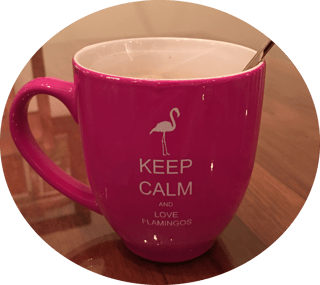
3: "Keep calm and love flamingos"
Okay, so the flamingo part of this one is a long story about a silly prank on a school trip from decades ago. But, that's not the point. The point is this - one of my other best friends found a fun reminder of the past and passed this it as part of a care package shortly after diagnosis (actual mug pictured above). This helped remind me of that fun part of life - and that fun part of myself - which felt distant at the time. I was reminded that it was there, and would be there, when I felt ready for it again.
The three listed above are just a few examples of the supportive words offered, and they all have one thing in common: they were all genuine and simple. And, I think these types of expressions could help anyone managing any diagnosis. Oh, and one more thing, even coming from a non-huggy person like me, hugs always helped, too.
Perspective to share? Add it to the comments below!